
What Causes Uterine Fibroids?

Fibroid Estrogen Connection
Although no precise answers exist for the development of uterine fibroid tumors, there is a link between fibroids and estrogen production.
Fibroids do not develop until the body begins producing estrogen during the onset of menstruation. During the reproductive years, hormonal imbalance can cause fibroids to form and grow. Hormonal imbalance occurs when estrogen and progesterone are not present in the proper proportions, often referred to as estrogen dominance. The most common imbalance that causes fibroids is low progesterone in ratio to estrogen.
Progesterone production decreases during the 30s and 40s. When additional estrogen, such as the type found in birth control pills, hormone replacement therapy, and plant and environmental estrogens is brought into the mix, hormonal imbalance occurs. Additionally, fibroid tumors may grow very quickly during pregnancy when the body is producing extra estrogen.
Primary Types of Uterine Fibroids
Uterine fibroids can be so tiny that you need a microscope to see them. However, they can grow very large. They may fill the entire uterus, and may weigh several pounds. Although it is possible for just one fibroid to develop, usually there are more than one.
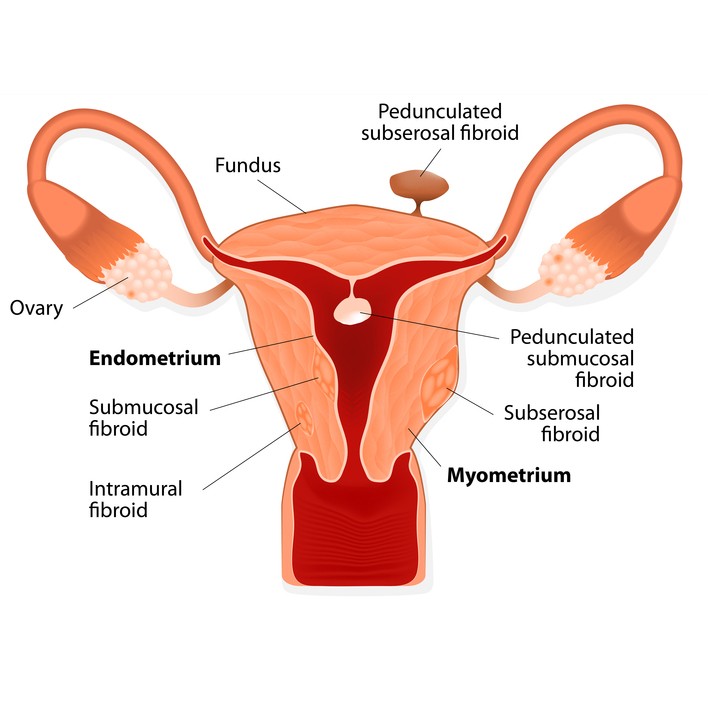
There are four primary types of uterine fibroids, classified primarily according to location in the uterus:
Subserosal – These fibroids develop in the outer portion of the uterus and continue to grow outward. This type can cause the uterus to grow.
Intramural – The most common type of fibroid. These develop within the uterine wall and expand making the uterus feel larger than normal (which may cause “bulk symptoms”).
Submucosal – These fibroids develop just under the lining of the uterine cavity. These are the fibroids that have the most effect on heavy menstrual bleeding and the ones that can cause problems with infertility and miscarriage.
Pedunculated – Fibroids that grow on a small stalk that connects them to the inner or outer wall of the uterus.
Addressing Uterine Fibroids
Often, women are told that a fibroid condition does not need to be medically addressed unless they become bothersome. However, once at this point invasive procedures such as surgery, hysterectomy, myomectomy, and embolization are generally the only options offered. Therefore, it is a good idea to try and resolve this condition before fibroids become too large or problematic. In many cases, if they have become large and problematic, but are not a threat to your health or vital organs, then you should still be able to attempt to shrink them naturally.
Uterine fibroids often shrink and disappear after menopause when the body stops producing as much estrogen. However, if a woman has used hormone replacement therapy for many years, there is a possibility that she may have an excess of stored estrogen that can prevent fibroids from shrinking after menopause. A woman will almost never develop fibroid tumors after menopause.
Please read our fibroid tumor website page where you can learn more about this condition, as well as a variety of natural dietary supplements that have helped many women shrink their fibroids.
2 Comments
Comments are closed.



I have recently found out I have a fibroid I was given option to get surgery done because it is huge, I reffused because I can still bare children what I want to know is what other ways can I deal with this to get rid of this fibroid
Using vitalzym now for two plus months- not much improvement- going to yake more vit d and use progesterone cream as directed. Need regular walks too i guess as i am a nervous person and walking helps with stress. Diagnosed two years ago with uterine polyp- is that the same as a fibroid?